



5 min read

What Equipment Tracking Options Are There Beyond RFID?

What Equipment Tracking Options Are There Beyond RFID?

If you only listen to smart locker salespeople, you’d assume RFID is the end-all, be-all for equipment tracking. Plain and simple, it’s not. And even when it is the right choice, it’s seldom a good idea to start with a technology and work your way backward from there to design. That’s almost always going to lead to over-engineered systems that don’t really fit the way you work.

Don’t start with the solution; start with the problem. What operational challenge are you trying to solve? There’s a wide range of equipment tracking solutions to choose from. Choose the ones that best align with how your workforce uses your equipment and your business risk of losing it.

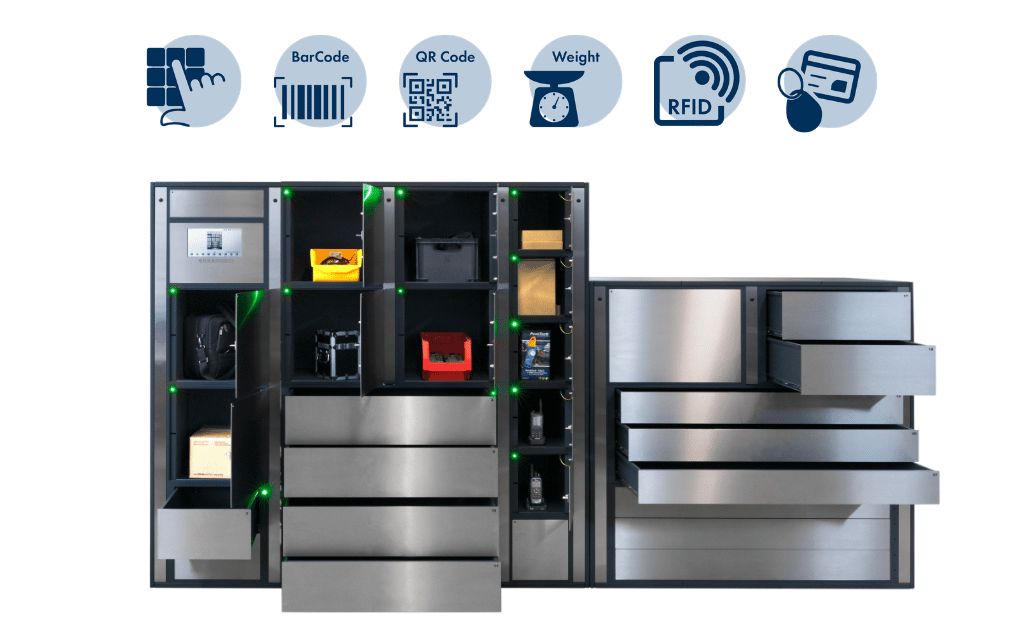
The 5 Leading Options to Monitor Assets & Equipment

When you’re designing a smart locker system, you shouldn’t ask, “Do we want tracking or not?” It’s not a yes/no question. Instead, ask, “How much visibility do we need, and when?” Then match your need to the available tracking options.

Here are five options you can realistically choose. They vary largely in their automation, ease of use, complexity, and cost.

Type

Form

Pros

Cons

Best for

Manual Signouts

Logbooks, spreadsheets, pegboards

Low-to-zero cost, simple setup

Manual processes, relies on staff compliance

Low-frequency use of low-risk/low-cost equipment

Barcode/QR Codes

Optical scans at locker control panels, or via mobile device

Lower cost, readily available

Requires manual, line-of-sight scanning

Inexpensive equipment, in confined tool cribs or other structured sign-out process

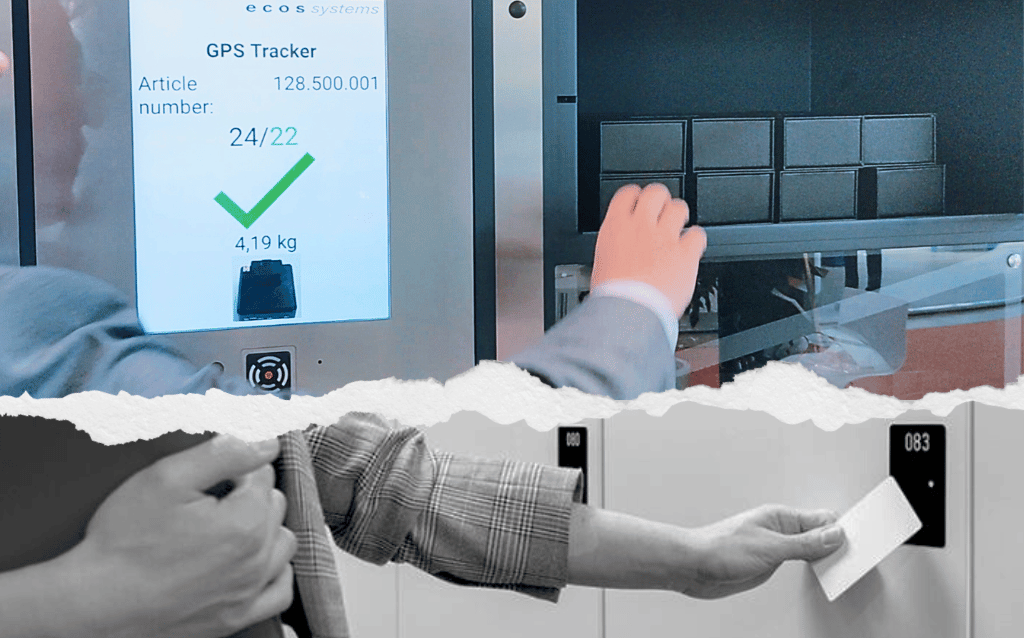
Weight Detection

Integrated smart scales in compartments detect 1g weight changes

Fully automated, no line-of-sight needed, no tags

Cannot differentiate identically-weighted items

Managing consumables, bulk inventory,  irregular tools you can’t tag

Passive RFID

Wireless scanning inside or outside locker compartments

Contactless, automated, and serialized tracking

Requires physical tagging, prone to RF interference from liquids and metals

High-turnover, serialized assets, like handheld scanners, testing equipment, keys

Real-time Location Services

(GPS, BLE)

Battery-powered tags broadcast location data

Wide-area tracking, real-time location data

Highest per-unit hardware cost, battery/tag replacements required

High value, moving assets in open campuses or indoor spaces

The Decision Framework: 6 Questions to Pinpoint Your Tracking Method

Some use cases call for one of the five tracking types above. But real-world use cases are always more nuanced and complex than the examples we provided. These six guided questions will help narrow down which options might be best for you.

1. Do you need serialized identity or just asset detection?

Serialization means unique identification for equipment. For example, you number 100 handheld scanners: Scan 1, Scan 2, etc. If you need to track individual items like this, your three primary options are Barcodes/QR codes, RFID, and RTLS.

If you don’t need that, the other options are viable. For example, you have one shared safety harness, and you just need live confirmation from your tracking system on whether the harness is signed out.

2. What is the asset’s replacement cost and operational value?

Smart locker and asset tracking systems are expensive; there’s no way around it. Their cost is justified only when losing your equipment has an even greater impact on your business. That might be in their direct replacement, but often the significantly greater cost is lost productivity.

If you have highly paid engineers who need to sign out one of only three precision-calibrated tools, and those tools are missing, a very expensive project and all the other assets you’ve committed to that project are suddenly sitting there idle.

Identify the direct and indirect costs of equipment loss for the items you want to track. If the consequences are minimal, consider sticking with manual tracking or barcode scanning if the items themselves are costly.

But if you have scenarios like the example above, where operational downtime carries a high cost, you probably need some form of automated, live tracking service: RFID, weight, RTLS.

3. How frequently does the item move?

Are employees signing out an asset once a day, or are assets coming and going dozens or even hundreds of times a day? The more frequent the transactions, the more operational overhead you’re incurring with manual processes. Regular transactions involving high-value, high-risk assets will benefit more from automated tracking processes, such as weight tracking or RFID.

4. What are your regulatory and compliance obligations?

If you’re operating under any regulatory requirements for equipment security or tracking, you need a tracking system that verifies sign-outs. Manual tracking and barcode scanning show that a transaction occurred, but it only verifies the presence of an asset near a sign-out station or locker. You don’t actually have verification that the asset was securely returned.

Weight scanning, RFID, and RTLS all verify the physical presence of equipment inside a locker.

5. What physical constraints exist in your operational environment?

RTLS systems provide highly accurate, real-time location data, but only if the tags can transmit signals to receivers. Walls, metal objects, and liquids all interfere with radio transmission. If you need real-time data but your worksite is packed with those materials, you may need an alternative.

Weight scanning and RFID may not provide live tracking through your facility, but they can provide real-time transaction verification. RFID is only an option in this scenario if the tags remain attached and intact. If tag durability is a concern, weight scanning is your best option for real-time data with verification.

6. What level of user compliance is realistic?

Do you have a small, responsible workforce? You might not need a smart locker unless you answered ‘yes’ to many other questions here. If your equipment is low-cost and low-risk, and you can trust your workforce to follow procedures reliably, then a low-cost solution is viable.

If you have high turnover, hectic workplaces, or are dealing with high-value, high-risk assets, you will likely benefit from some form of automated tracking.

Debunking 4 Common Equipment Tracking Claims

A lot of misinformation still floats around in smart locker sales pitches, especially about tracking options. As we’ve seen here, there are many viable tracking systems, not just RFID.

Let’s debunk four specific false claims we’ve heard.

Assumption 1: "RFID is the only modern standard."

RFID is just one tool among many. It’s a great choice for many use cases, but it’s not the only choice, and far from the one “modern” choice. Some situations make it simply not viable.

For example, if you’re storing a large number of tools in a single location, it won’t read effectively. If you have lubricated tools or tools that otherwise can’t have a tag attached, RFID won’t work either. Or if your items are too small to tag practically.

Assumption 2: "You must track every single item as a unique serial number."

This isn’t true and is usually something you’ll hear from a company selling an equipment-tracking system that exclusively uses serialized tech, like QR code scanning or RFID.

Many situations don’t require serialization, but still need precise tracking. For example, in law enforcement and private security, you’re often mandated to track the use of force. Many agencies need to track ammunition or pepper-spray use for this purpose and for their own accountability and safety. Weight-tracking scales can measure down to the gram and can easily tell you how many rounds of ammunition have been expended when an officer returns a clip.

Assumption 3: "Manual and barcode tracking are entirely obsolete."

Both methods suit many use cases, and smart locker tracking can be overkill for many of those. For example, if you only have a shelf of commodity screwdrivers and wrenches in a tool crib, the replacement and operational costs almost certainly won’t justify the use of a smart tracking system. They will be perfectly happy with manual sign-outs or, at most, barcoded scanning.

Assumption 4: "Real-time tracking is always better than checkpoint visibility."

This is the false claim at the opposite end of the tracking spectrum. No, full real-time location tracking only has value in certain use cases. It’s predominantly used when you need to track the progress and condition of high-value assets on a production line. For example, GPS tags are often used to track automobiles in production when staff need to know what stage of the assembly line they’re on.

For items like a handheld picking scanner in a shipping center, knowing their location in the warehouse has little value. But you do want to know exactly when it’s returned, if it’s working, and what its charge level is.

Match a Tracking Method to Risk

You have many options for asset tracking. The best tracking solution is the simplest one that meets your requirements for security, cost management, operational risk, and accountability. 

There are many options, so take the time to find the right solution for you.

 
The Hidden Vulnerabilities of External Scanning in Smart Lockers

The Hidden Vulnerabilities of External Scanning in Smart Lockers

Discover why external scanning in smart lockers can pose significant security risks and explore more secure alternatives for managing your assets
Read More
Moving Past RFID with Weight Recognition

Moving Past RFID with Weight Recognition

Discover how weight recognition technology surpasses RFID in equipment tracking and management, offering superior accuracy and reduced costs.
Read More
The Hidden Risks of Using Multi-Bay Chargers in Smart Lockers

The Hidden Risks of Using Multi-Bay Chargers in Smart Lockers

Using multi-bay chargers in smart lockers undermines accountability and efficiency. Learn the benefits of one device per compartment for asset...

Read More