




5 min read

Chain of Custody vs. Asset Tracking

Chain of Custody vs. Asset Tracking

Mission-critical: (adj.) Any system, process, device, or person that is completely necessary for an organization to function.

Most people associate "chain of custody" with courtroom evidence. A sample from a crime scene was mishandled, and the judge won’t allow it into evidence because the police lost the chain of custody.

The concept is actually much simpler and more relevant to businesses. Most importantly for our discussion, it's not the same as “asset tracking.”

This article explains the differences between asset management systems that provide basic tracking and ones that maintain a complete chain of custody.

What Are The Core Differences Between Asset Tracking vs. Chain of Custody?

Chain of custody is the documented timeline of who interacted with which assets and when. Many organizations assume that because they have an asset or equipment management system, they automatically have a chain of custody. However, tracking equipment and maintaining a chain of custody are different, with different impacts on operations.

Asset tracking, as system providers commonly sell it, focuses on logging location and inventory status. It’s like a library card catalogue—it tells you a book exists and which shelf it belongs on. It answers macro-level questions:

  • Where is this equipment supposed to be?
  • Is it in service, in repair, or trashed?

Chain of custody is granular and structured as an unbroken timeline. At every touchpoint with an asset, the system logs:

  • Who took the item?
  • When did they take it?
  • What was its condition?
  • When was it returned and by whom? Has its condition changed?

Instead of a simple card catalogue, a chain of custody combines the library’s catalogue, checkout records, security camera logs, and member records. It provides indisputable proof of possession if a book goes missing.

Operational Element Asset Tracking Chain of Custody
Primary Focus Location Accountability
Core Question Answered "Is this asset in inventory?" "Who was responsible for this asset at a specific time?"
Verification Method System access (e.g., door opened, barcode scanned) Physical presence (e.g., RFID verification, weight tracking)
Documentation Level Basic status logs Time-stamped audit logs
Desired Outcome Inventory visibility & loss prevention Complete asset lifecycle management, compliance & operational efficiency


Chain of Custody Helps Everyday Operations, Not Just Audits

If all you care about is equipment cost and loss prevention, a system with basic asset tracking will work fine. But the more essential specific equipment is to your workflows, the more likely you’ll want chain-of-custody tracking.

For example, handheld picking devices in a warehouse. Modern logistics is digital. Pickers get order items right on their handheld, scan inventory barcodes as they pack items, and log when orders are ready to ship. The handheld is the workflow. There’s really no way to go back to pen-and-paper warehouse ops anymore. So a warehouse supervisor could buy a huge inventory of spare scanners to hedge against some inevitably going missing, or they could automate device management with a digital chain of custody.

Many organizations in the public and private sectors have mission-critical equipment like those warehouse handhelds.

Law Enforcement & Public Safety

Police and other law enforcement officers rely on many critical pieces of equipment. And during a busy shift change, your agency may have only minutes to collect and hand off shared tactical equipment, body cameras, specialized gear, firearms, and two-way radios.

If an officer doesn’t return a radio, supervisors waste time chasing down off-duty personnel rather than focusing on more proactive work. Establishing an automated chain of custody for police gear, as you do for evidence, can streamline every shift handoff and make equipment management easier, more reliable, and more cost-effective.

Healthcare Facilities

High-demand items are hard to keep track of in healthcare settings—portable diagnostic tools, specialized medical toolkits, two-way radios, and master access keys and cards all get handed off throughout the shift. When a nurse or tech can’t find specialized equipment, it can directly affect patient care.

Healthcare greatly benefits from individualized tracking and individual accountability, especially tracking you can perform in the field, not just at storage lockers. Without a strong chain of custody, care-critical devices can end up tucked away in the breakroom or left on a rolling cart in the hall when another nurse needs them most.

Property Management & General Business Operations

Property managers oversee a nonstop flow of workers needing access to keys, specialized tools, and site-specific materials.

If a contractor leaves the property with a master key and no digital paper trail showing who had it last, a large swath of your site security is instantly compromised. The manager faces an uncomfortable choice: pay thousands to rekey a facility or assume the risk. It's not really a choice.

An asset management system that maintains an unbroken chain of custody makes recovery almost certain.

Why Manual Chain of Custody Logbooks Fail

On paper, manual tracking policies sound like a great solution. Before picking up or returning a mission-critical asset, employees just write down their name, the item ID, and the timestamp. Simple.

A massive gap exists between these policies and the operational reality of most worksites. During routine, but rushed, operations, and especially during emergencies, policy compliance of this nature drops to the bottom of everyone's list.

The Cost: Liability, Blame, and Escalating Disputes

Without an objective record, you’re left just going person-to-person to figure out where your equipment is. And there often aren’t many direct costs, unless an asset is ultimately reported lost. But they still carry indirect operational costs:

  1. Liability: If a master key is unaccounted for, or not enough radios are available during a workplace emergency, your response can be compromised.
  2. Finger-pointing: When accountability is guesswork, you’ll waste time and hurt morale interrogating everyone potentially involved in a loss.
  3. Wasted Hours: Supervisors waste hours cross-referencing who was on shift, interviewing people, and physically searching facilities instead of running your business.

Make Accountability a Byproduct of Normal Operations

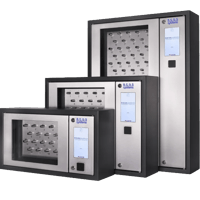
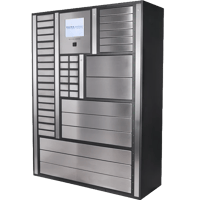
An automated chain of custody enables your business. It’s not added overhead. When logging happens passively inside smart lockers, you’re generating chain of custody as a byproduct of normal operations. Your team simply checks equipment in and out to do their jobs, while the system quietly builds an airtight chain of custody in the background.

Key Technological Safeguards

Intelligent storage systems replace the honour system with hard data. You’re embedding security features directly into the hardware that manages signouts.

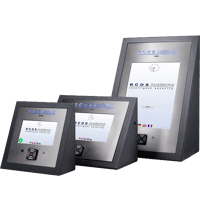
  • Credential & Biometric Authentication: Access requires a unique identifier, ideally tied directly to an individual, like a biometric scan.
  • Automated Timestamps: The system logs the exact second an asset leaves a compartment using weight or RFID sensors. Not simply assuming a transaction completes because someone badged in and unlocked a door.
  • Immutable Audit Logs: The system automatically compiles access logs into tamper-proof, exportable digital logs.

The Power of Multi-Read RFID Content Surveillance

The critical flaw in electronic lockers that use only basic asset tracking is that they actually track intent. Meaning when someone opens a compartment, the system logs that they took or returned an asset. Did they?

A bad actor will definitely look to exploit that security gap. Even the best employee may forget to complete a transaction if they get pulled away for something urgent in the middle of a sign-out.

Advanced asset management systems solve this blind spot using multi-read RFID content surveillance. Instead of assuming an item is present, scanners inside each compartment scan the RFID tags attached to your gear in real time. The locker instantly verifies the exact physical presence of the item, or multiple items in a single kit. The system detects the discrepancy immediately if an employee returns a radio headset but leaves the battery pack behind.

Advanced systems also now include precision scales that measure the presence of specific assets down to the milligram. They can track ammunition in a clip to verify whether rounds have been expended. They can check whether anything is missing among consumable materials. And it is all digitally recorded.

Mobile Chain of Custody Extends Accountability into the Field

In fast-paced environments, your workers will frequently need to hand off gear in the field. Without real-time tracking, these peer-to-peer transfers create dangerous blind spots in your audit trail.

The ecos app extends your digital chain of custody directly to your employees’ smartphones. The mobile system immediately logs the precise location, timestamp, and user credentials for both individuals. You maintain accountability without forcing your team to waste time driving back to a physical locker.

Protecting Your Team and Keeping Operations Running

Beyond tracking high-value equipment, an automated chain of custody protects your workflows and your workforce. When important equipment goes missing, the resulting investigation could put an entire shift under suspicion. That’s not good for morale.

Objective, automated access records eliminate that friction by establishing clear, indisputable proof of possession. Everyone knows they're accountable, so your employees can go about their work fully empowered, without getting drawn into unnecessary finger-pointing.

Tracking chain of custody is operational insurance

Buying a smart asset management system that actually tracks chain of custody embeds accountability directly into your daily routines. You’re making your workers’ lives simpler and making business run smoother. Smart asset management systems protect your team, preserve your budget, and keep you moving forward at full speed.

The Hidden Vulnerabilities of External Scanning in Smart Lockers

The Hidden Vulnerabilities of External Scanning in Smart Lockers

Discover why external scanning in smart lockers can pose significant security risks and explore more secure alternatives for managing your assets
Read More
The Hidden Cost of Warehouse Technology

The Hidden Cost of Warehouse Technology

Discover the hidden costs of inadequate equipment management in warehouses and 3PLs, and learn how to enhance accountability and operational...

Read More
Moving Past RFID with Weight Recognition

Moving Past RFID with Weight Recognition

Discover how weight recognition technology surpasses RFID in equipment tracking and management, offering superior accuracy and reduced costs.

Read More