



5 min read

The 5-Year Financial Impact of Key Loss

The 5-Year Financial Impact of Key Loss

This may sound familiar to auto dealership owners: Your service manager knocks on your door and says a mechanic can’t find the key to the customer's vehicle that their colleague had before going on vacation. It’s missing, and you can’t wait a week to get this customer their car back.

Not much you can do. You need to order replacement keys from the manufacturer, which incurs costs and delays. The average cost can range from $200 to $600 for smart key replacements. It’s yet another minor operational hiccup, but you deal with it, move on, and accept it as a cost of doing business.

Except it isn't an isolated incident. You have some version of this "minor" problem multiple times a year across all your locations.

Small disruptions are common when you track things by hand. A misplaced key is no big deal, right? Over time, these nuisances are quietly eating into your margins. This applies to every business; this isn’t anything unique to auto dealerships.

Let’s map out what the mid-to-long-term financial impact of manual key and device management actually looks like.

How to Itemize Missing Asset Costs

It’s only when you aggregate the smaller costs, like service calls and work delays, over time that the true financial impact becomes clear. For example, in our missing key example above, let’s say that happens a dozen times a year across all your locations. That’s $2100 in locksmith fees alone, not counting the work hours sunk into it, the delays it caused, or the reputational damage from understandably frustrated customers.

These costs generally fall into five distinct categories:

1. Direct Hard Costs

These are the expenses that will generate a paper trail and are easiest to track:

  • Emergency locksmith calls
  • Physical rekeying of doors, core locks, or entire departments after a master key goes missing
  • Key fob replacement for modern vehicles and electronic access doors, which often require reprogramming fees in addition to hardware costs.

2. Work Stoppages

These are quite hard to track, as the most frequent loss occurs in five- and ten-minute increments. Those won’t show up on any report.

You’re still paying wages while employees hunt for missing keys. Across a full team, over a year or five, these wasted minutes add up to hundreds of lost labour hours.

3. Service Capacity and Downtime

When access stalls, operations stall.

  • Idle service bays: If a vehicle can’t move in or out, you’re not using your facility effectively.
  • Delayed delivery: Customers wait longer when assets aren't where the schedule says they should be.
  • Vendor bottlenecks: External contractors sit idle on the clock while waiting for your staff to find a master key.

4. Unmanaged Liability

No tracking means no accountability, no audit trail, and no coverage for legal or insurance claims.

5. The “Turnover Tax”

If you rely on manual processes, a departing employee can significantly disrupt your operations. Without automated controls, they might forget to return keys or fail to pass along crucial access-control knowledge. Each new hire then inherits an increasingly disorganized system.

The 5-Year Reality Check: Industry Scenarios

To see how these costs accumulate over time, let’s look at how access friction plays out in two common operating environments.

Scenario A: The Auto Dealership and Service Center

Consider a mid-sized automotive dealership. They have a 200-vehicle lot, 8 active service bays, and 15 service employees.

The Operational Breakdown

Let’s make some conservative estimates. We’ve used fees on the low-to-medium end for many industries and key types to illustrate the costs of what could reasonably be considered “better” case scenarios.

  • Daily key searches: Service advisors and technicians lose an average of 5 total minutes per employee each day searching for vehicle keys or tracking down who last moved a car. Across their 15 service staff, that’s 1.25 hours of lost billable labour daily.
  • Idle bay time: Over one week, that means service bays also sit idle for 60 minutes while staff hunt for keys.
  • Lost or damaged fobs: The dealership replaces an average of 2 key fobs per year due to misplacement or loss during vehicle staging, at $250 per fob including programming.
  • Emergency locksmith services: The dealership calls a locksmith once a year for emergency gain-entry or lockout situations.

Expense Category

Annual Cost Impact

5-Year Cumulative Impact

Wasted 15x Staff Labour (1.25 hrs/day @ $30/hr, 250 workdays)

$9,375

$46,875

Lost Bay Productivity (52 hrs idle bay time @ $100/hr billable)

$5,200

$26,000

Key Fob Replacements (2 fobs/year @ $250 each)

$500

$2,500

Emergency Locksmith Fees (1 call/year @ $175 each)

$175

$875

Total Estimated Financial Drag

$15,250

$76,250


Over five years, this mid-sized dealership absorbs $76,250 in costs from daily key-management friction.

Scenario B: The Property Management Firm

Consider a company managing a 200-unit complex with 12 maintenance and facility employees.

The Operational Breakdown

  • Vendor and work order delays: Maintenance technicians spend an average of 10 minutes per work order locating the relevant unit keys, managing key handoffs, and handling other access-control logistics and logging that aren’t automated. Averaging 4 work orders a day, staff lose 40 minutes of productive time daily.
  • Emergency rekeying: Misplaced master or sub-master keys require emergency core rekeying twice a year. Again, the figures below are conservative. Worst-case scenario master key losses in the recent past have resulted in rekeying projects of over half a million dollars.
  • Hardware replacement: The property replaces about 15 unit keys and access cards monthly because of poor return tracking during resident move-outs and staff shifts.

Expense Category

Annual Cost Impact

5-Year Cumulative Impact

Maintenance Labour Friction (40 mins/day @ $25/hr, 250 workdays)

$4,167

$20,833

Master Rekeying Incidents (2 property rekeying events @ $1,500 each)

$3,000

$15,000

Key & Fob Replacements (180 items/year @ $25 average replacement)

$4,500

$22,500

Total Estimated Financial Drag

$11,667

$58,333


For a 200-unit property, manual access processes silently extract over $58,333 in revenue every five years. Basic maintenance coordination, factored over time, is a major operating expense.

A Self-Assessment Framework

When access issues span departments, no single supervisor sees the full financial impact. Of course, every organization will have different cost categories. Still, for many, you can bring the drag on revenue generated by key management to light by measuring three core operational variables:

  • Asset Scope: The total number of keys, vehicle fobs, access badges, and secure bays or units your team manages daily.
  • Labour Friction: The average number of minutes your staff spends searching for keys, verifying logbooks, or handing off access credentials each day.
  • Turnover & Rekeying Frequency: How often employee turnover or misplaced keys trigger rekeying, lock changes, or hardware replacements.

Project Your 5-Year Cost of Inaction

Why five years? Because this horizon compares well with the capital expenditure on an automated key and asset management system.

To see what poor access accountability is costing your specific operation, gather your team’s baseline numbers. Plug your operational data into this diagnostic framework to reveal your hidden financial drag over 5 years:

Operational Variable

Your Numbers

Calculation Baseline

Active Staff & Technicians

[ Count ]

Multiply total staff by average daily minutes spent searching for keys. Convert to annual payroll hours.

Facility Capacity Impact

[ Hours ]

Estimate annual idle bay or maintenance downtime caused by missing access credentials.

Annual Locksmith & Rekeying Events

[ Count ]

Multiply annual callouts by average service fee (e.g., $175–$1,500 per incident).

Lost Key & Fob Replacements

[ Count ]

Multiply annual lost units by hardware and programming costs (e.g., $25–$250 per item).


Take a Proactive Approach to Cost Recovery

Don’t treat the cost of key loss as some abstract future risk. Over a mid-to-long-term time horizon, you’re looking at inevitable expenses building up and up and up.

Reframe how you think about the investment in key management: Pay for structural control once, or pay for continuous operational drag forever?

Every misplaced fob, idle service bay, and manual search for a key or device that delays work is a little more revenue slipping through the cracks. This outdated, manual management guarantees you will keep paying for friction in daily labour and service delays. Automated access management eliminates the invisible leak of lost time, fixes chain-of-custody gaps, and helps keep your facility operating at full capacity.

Take Control of Your Facility's Operations

Stop letting unmanaged access dictate your daily operational costs. Take the next step toward securing your facilities and protecting your bottom line:

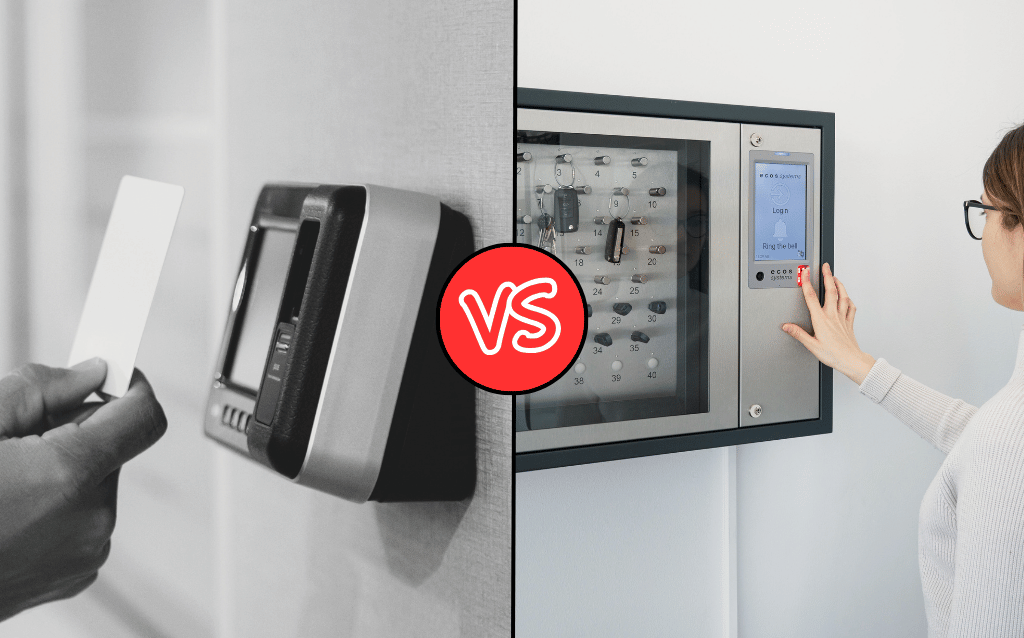
Access Control System vs. Key Management System?

Access Control System vs. Key Management System?

Explore the differences between access control systems and key management systems, and learn how to strategically implement both for optimal security.

Read More
The Hidden Costs of Physical Key Management

The Hidden Costs of Physical Key Management 

Discover the hidden costs of physical key management and learn how cloud-based systems can save your business time & money and enhance security and...

Read More
Why True SaaS Software Matters in Physical Key Management

Why True SaaS Software Matters in Physical Key Management

Discover why true SaaS software is essential for efficient, secure physical key management and avoid the hidden costs of on-premises solutions.

Read More