



Electronic key management system benefits
Discover 8 key benefits of electronic key management systems for your business, including enhanced security, compliance, and efficiency.
5 min read
Shannon Arnold : Updated on November 13, 2026
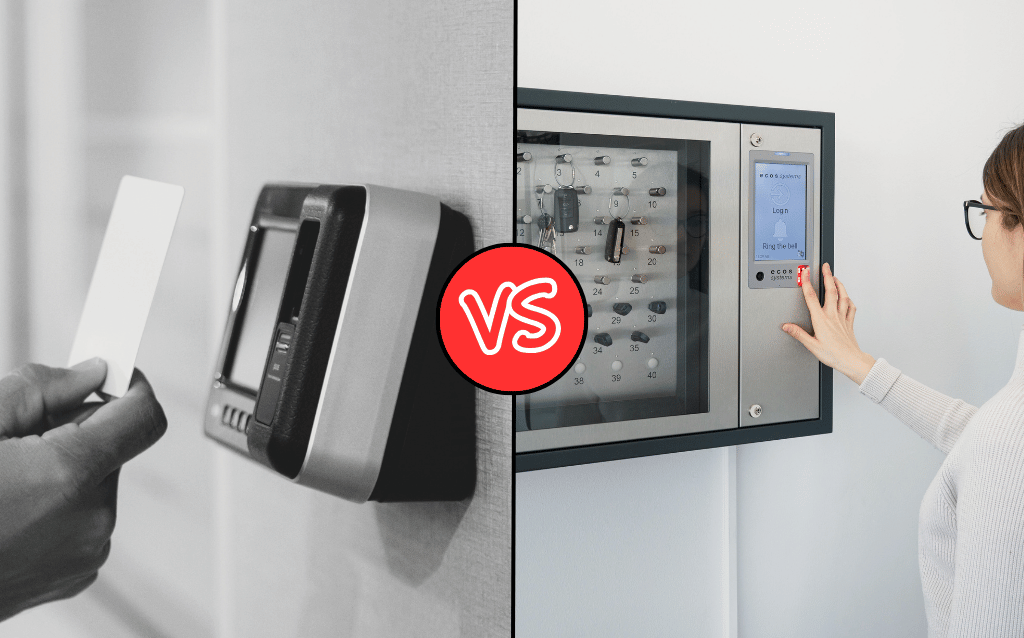
Access control systems and key management systems play two distinct but complementary roles. All too often, you’ll see a product in one of these categories marketed as an all-in-one building security solution. But that’s not how you want to use them.
Step back and think about them strategically:
The goal of access control is to verify who is allowed inside a perimeter. The aim of enhanced, electronic key management is to control those perimeters, but also to keep people accountable for workflows inside your organization. This distinction is subtle but important.
These aims are complementary; they’re not in conflict. You don’t want to choose one over the other.
In this article, we’ll explore how to use each system type, and which use cases make sense at each price point.
Access control and key management are two distinct security practices. Let’s start by understanding the boundary between them.
Enterprise access control protects the most important areas of your facility. For example:
Access control occurs at the perimeter, doorways, and entrances to these sensitive spaces. Once someone is inside, they’re beyond the purview of access control systems and must be managed with a different security system.
Common technologies here include card readers, electric strike locks, controller hardware, and credentials, like fobs, swipe cards, apps, and biometrics.
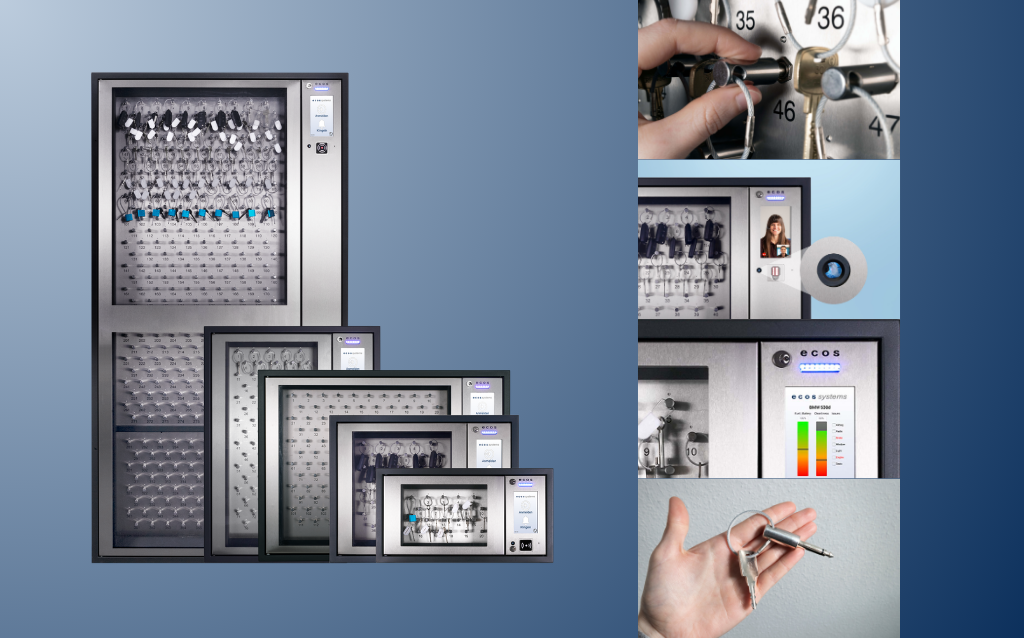
The objective of enterprise key management is to protect physical keys and streamline and standardize the workflows people use to access them. A key management system automatically tracks who signs out keys for internal enterprise resources and maintains an audit log of how long they were gone and when they returned those keys. Advanced systems can collect additional data at sign-out or return, providing important context about key use.
Common technologies here include key cabinets with electronic lock slots, lock slot plugs, access control panels, and similar credentials, like fobs, swipe cards, apps, and biometrics.
Access control proves who badged in at a doorway at a given time. It’s fundamentally distributed. It’s verifying someone’s presence at a physical location within your facility. That’s powerful, but it can be costly to secure every single physical location in this way.
It’s a subtle distinction, but in key management, you’re tracking an asset's physical custody. You don’t need security controls built into the physical door to hold someone accountable for access; you can centrally manage custody of physical keys that employees take with them out of your facility.
That also means you maintain digital control and auditability over entryways and other assets without installing digital access control assets at every entryway. In other words, only one set of electronics instead of dozens or hundreds.
Electronic access control (EAC) is essentially decentralized electronic access security. Physical key management centralizes that function by changing what you track (Custody instead of presence). Each approach has its place in enterprise security.
Let’s take an extreme example: Using a full hardwired EAC on a supply closet door is obviously a waste. Securing all entry into the data center for a national shipping and logistics network with a single key is likewise an unacceptable security risk. Each scenario demands a different type of security. You wouldn’t want EAC across the board, and you wouldn’t want physical keys either, given these use cases.
It comes down to economics: what cost should you bear to manage the specific risk in each use case?
Cost range per door: $150-$2500, installed
At the high end, you have enterprise access control systems from companies like Gallagher or Lenel, where the combined infrastructure can run several thousand dollars per door. Let’s be generous and say $2500 on average. That includes hardware infrastructure, wiring, control panels, controller units, and premium software licensing.
At the lower end are electronic locks. These are cheaper, but only in comparison, and they require specific modern bore-cut door designs to work. Assuming your facility has the right doors, you’re looking at $150-$200 plus installation labour per door. That includes card readers, sensors, wiring and power, and software licensing.
Cost range per door: $75-$100, installed
Instead of installing electronics at each door, you centralize it in a key management system, and the costs scale completely differently. You install enterprise-grade physical locks, and then embed the electronics in key-tracking slots. You’ll install a modular electronic cabinet and access control panel. Modern systems even come with integrated networking, so you won’t need to run new Ethernet lines for an install.
Altogether, you’re looking at up to $100 per door.
Software licensing will vary by vendor. Some will charge a SaaS subscription. Others, like ecos, charge one-time licenses per system and also offer a SaaS subscription option.
Let’s consider a good-sized hotel as an example. It has clear use cases for both access control and key management, broken down by Front-of-House (FOH) and Back-of-House (BOH) operations and spaces.
Key areas: Guest rooms, fitness centers, front desk cashier drawers, executive offices, telecom/IT room.
Front-of-house security focuses on protecting revenue, guest experience, and your brand. You’re also trying to minimize liability.
EAC provides verified security-by-presence at all these key points. Physical keys may work in some situations, but custody of an access control key is a liability. If someone loses a physical key to a FOH asset, that will require immediate rekeying and expose spaces like guest rooms to unacceptable risk.
Key areas: Housekeeping/supply closets, boiler room, laundry, receiving docks, maintenance workshop.
There’s still business risk to manage here, but your main driver is operating efficiency. Your aim is usually to reduce friction when handing over key custody between shifts without sacrificing employee accountability. Tracking it electronically helps eliminate the risk of minor security issues snowballing into more costly problems. For example, an untracked key sign-out for the maintenance locker can lead to important plumbing tools going missing, with no clear record of who had what and when. Then a guest calls with a plumbing emergency.
Most large organizations will want a combination of access control and key management. But in some high-security settings, you’ll want a layered, defence-in-depth strategy. Consider combining access and key systems when:
|
Factor |
Electronic Access Control (EAC) |
Smart Key Management Systems |
|
Primary Focus |
Managing point-in-time entry through doors |
Managing custody of physical keys and assets |
|
Average Cost Footprint |
~$1,000–$2,500+ per door (hardware + wiring) |
~$50 per tracked key slot |
|
Infrastructure Impact |
High (cabling, controllers, door modification) |
Low (single wall-mounted or freestanding cabinet) |
|
Visibility Provided |
Ingress/egress event logs at specific doors |
Duration of custody, user identity, return status |
|
Asset Tracking Capability |
Indirect (only proves presence at a door) |
Direct (tracks the actual key, fob, tool, or vehicle) |
|
Ideal Operational Zone |
Front-of-house, perimeters, high-risk assets |
Back-of-house, shared fleet, utility/supply closets |
|
System Resiliency |
Requires continuous power/network/backup systems |
Central battery backup; physical keys work offline |
You shouldn’t have to choose between access control and key management for your facility’s physical security. These technologies should work together by securing different layers within your organization.
Use high-performance, but higher-priced, EAC for your perimeter and critical spaces. Use key management to track key custody for internal resources and processes. Used together effectively, they’ll deliver the strongest, most reliable security program possible.
Are you ready to update your security program with the latest smart key management technology?
Discover 8 key benefits of electronic key management systems for your business, including enhanced security, compliance, and efficiency.
Discover how modern drawer-based key management systems enhance security without sacrificing storage space.
Key management systems secure physical keys, cut costs, and optimize operations for businesses of all sizes. Get the steps to implement one...