




Modern Business Has Left Yesterday’s Key Systems Behind
Modern key management systems integrate seamlessly with business networks, offer real-time tracking, automated alerts, and advanced analytics.
5 min read
"We need to know who accessed that key and when."
That’s the standard question most facility and security directors want answered to feel confident that their keys are secured. Most traditional key management systems can do that.
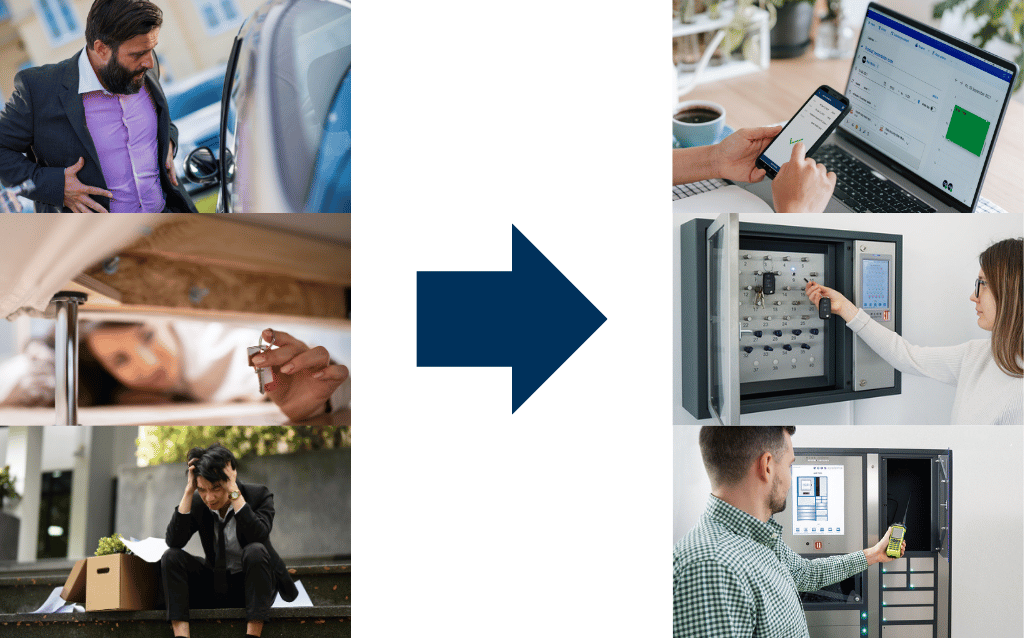
The problem is that those systems can only answer that question after an incident has occurred. In other words, their key security strategy is inherently reactive.
But you don’t need to operate that way. Proactive physical key management is possible using the right tools.
There are four core activities in a reliable physical security program:
Reacting to a key security breach is a form of defence. That’s good, but what about the other three? Your key cabinet might have delayed the attacker a little, but clearly not long enough. It did detect an issue for you, but left you with defending as your only recourse. Clearly, it didn’t deter anything.
A reactive security example
Let’s consider a business using a basic key storage system. It might even have a PIN pad for access control. That does provide a modicum of security, but using that system, you might only discover that you’re short a key during a weekly audit. The cabinet has no digital “intelligence.” It doesn’t know there was a problem, let alone have the ability to respond to it.
What if this business upgrades to a premium key cabinet with access control and a high-grade steel body? They might assume the heavy steel frame guarantees protection against brute-force attacks, but security ratings tell a different story. Even high-security safes are often rated to withstand a physical attack only for 10 minutes. A burglar could breach the unit at 2:00 AM, be out the door at 2:15 AM, and the security manager wouldn't know until the next morning.
If the only option your key system can offer is to react to an incident, your keys were never really secure in the first place. Proactive key management can detect tampering or a forced-entry attempt in progress and trigger an immediate alarm. You have a chance to intervene before the damage is done.
Proactive security is defined as the ability to detect and prevent incidents rather than simply documenting them for later action. This capability requires real-time visibility into your operations—knowing exactly who has which key at any specific moment, rather than waiting for a manual log check. Instead of knowing “who had a key,” knowing “who has a key.” Or even, “Who is trying to access that key right now?”
By implementing automated, digital controls, an intelligent key system can identify risks before they escalate:
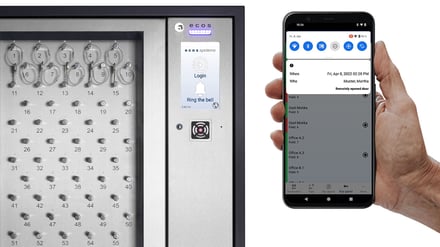
A proactive security example
The difference in reactive and proactive approaches is most evident during a physical attack. If a break-in occurs overnight, a standard key cabinet passively records the intrusion and saves logs for someone to eventually look for the missing key. No detection, irrelevant deterrence, and delay, since the attacker has all night, and only a reactive defence.
An intelligent, proactive key system monitor can detect a breach in real time and trigger an alarm to security personnel. Now, the delay of bruteforcing a high-grade steel cabinet is relevant—the attacker is working against the clock. If the attacker knows that’s possible, you have a powerful deterrent too. And your response, the defence, occurs live.
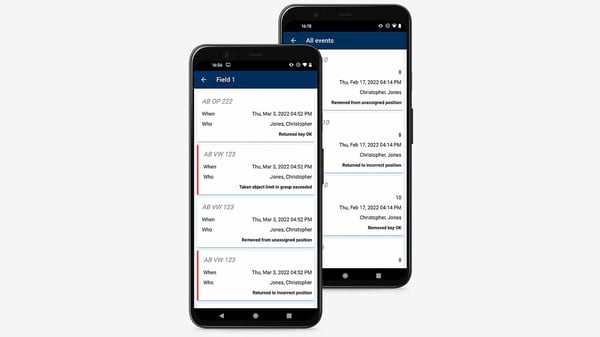
Many existing digital key management systems offer basic reporting features. However, many were designed years ago and still use legacy software that requires security personnel to be at a desktop to monitor activity. This is a little more helpful, but it still leaves a critical blind spot during evenings and weekends, when security incidents can go unnoticed the longest.
Key systems with modern, cloud-based software don’t have that limitation. For example, the ecos mobile app enables security teams to receive alarms and respond immediately, whether they are in a meeting, at home, or on their way to address an active incident.
These systems typically provide more than just simple notifications. Managers can grant emergency access remotely and use the app for live video surveillance. Unlike systems that offer only static verification, ecos key systems allow you to view picture and video evidence or monitor live feeds directly via smartphone to assess live security incidents.
Real-world example: The 6:00 PM alert
Consider a scenario where a high-security key is not returned at the end of a shift.
Beyond stopping physical theft, a proactive system fundamentally changes user behaviour. Automated tracking creates a culture of accountability that deters problems before they start. When every interaction is recorded—capturing exactly who accessed what and when, backed by detailed audit trails and video verification—unauthorized use becomes far less likely.
When used in this way, the key system becomes an active deterrent to security threats. Staff members are less likely to "borrow" a key without authorization or return it late when they know the system is actively monitoring transactions in real time.
Security technology should reduce your workload. That sounds so basic that it shouldn’t even need to be said, but too many systems overcomplicate key security or use the wrong sensing and automation technologies. They leave you stuck in a reactive position.
ecos systems are designed to actively help manage security through intelligent automation. By leveraging intelligent key management, automated notifications, and real-time alerts, security managers can focus on their most important responsibilities rather than spend hours glued to a monitor waiting for a notification of a potential issue.
If you want to be truly proactive, you need a key system that integrates seamlessly with your existing operations. Smart systems integrations are the key to that.
Other built-in tools for proactive security
ecos hardware is the result of years and years of iterative design improvements, all aimed at supporting a more proactive security posture.
Legacy key systems were built for a reactive world—one where you only learn about a breach after the assets are gone and the damage is done. They force security managers into a permanent state of damage control, discovering problems only during audits or after operations have been disrupted.
ecos key systems shift you toward proactive security. By combining real-time visibility, mobile control, and intelligent automation, they transform how you manage your keys.
Stop waiting for the next audit to discover a problem. Choose the solution that prevents it from happening in the first place.

Modern key management systems integrate seamlessly with business networks, offer real-time tracking, automated alerts, and advanced analytics.

Understand the hidden security risks of external scanners on key cabinets and why relying on external RFID scanning can leave your organization...

Explore why steel ID plugs outperform RFID key fobs for key tracking, focusing on durability, reliability, and long-term cost-effectiveness.