



6 min read

Critical Infrastructure Security Begins With Asset Accountability

Critical Infrastructure Security Begins With Asset Accountability

You might have bleeding-edge cybersecurity ready to pounce on any threat coming over the Internet, but that means nothing if attackers can just gain direct access to systems through unsecured doors, keys, or devices.

The reality today is you can’t think of security as physical or cyber. They’re converging. Digital breaches can provide physical access, and lapses in physical security can compromise systems. Good organizational security requires defending both fronts.

And for organizations managing power grids, water treatment plants, transportation hubs, and other critical infrastructure, the stakes couldn’t be higher. A breach doesn’t represent just a potential data leak;  it can mean service outages across entire regions, public safety risks, or even national security risks.

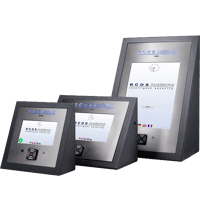
This article examines how modern threats can exploit weak physical access controls, equipment security, and key management. And how intelligent access systems like ecos provide verifiable, auditable control over who enters your most sensitive spaces.

The New Threat Landscape for Critical Infrastructure

Today’s adversaries—nation-states, hacktivists, and organized crime—continue to exploit gaps in the convergence of physical and network security measures.

The Colonial Pipeline Incident was a wake-up call

The 2021 ransomware attack on Colonial Pipeline made it clear to everyone that a single, unsecured account is all it takes to trigger an incident that forces 17 US states to declare a state of emergency. Hackers gained access via a compromised password for an old, unused virtual private network (VPN) account that the employee no longer needed for remote access.

Since then, the Cybersecurity and Infrastructure Security Agency (CISA) has emphasized that protecting operational technology (OT) environments requires both rigorous “digital hygiene” and robust physical access controls as a foundational layer of security. You can’t rely on just one or the other.

Nation-state actors increasingly target infrastructure

According to CISA intelligence reports, nation-state actors—including those from China, Russia, and Iran—are actively mapping vulnerabilities in U.S. and European critical infrastructure. Their tactics include:

  • Exploiting poorly managed contractor access
  • Cloning keycards or duplicating master keys
  • Using social engineering to gain temporary entry
  • Leaving behind rogue devices (e.g., USB drop attacks) during an on-site visit

Insider threats remain

Intentionally or unintentionally, your employees and contractors with legitimate physical access can become attack vectors. A disgruntled worker with late-night access or a vendor technician with elevated privileges can bypass both digital and procedural safeguards. This isn’t a hypothetical threat either. Within the past year, CISA has warned critical infrastructure organizations about efforts by PRC-sponsored hacking groups to identify systems and individuals vulnerable to compromise.

Physical Access as an Overlooked Attack Vector

While critical infrastructure organizations invest millions in network security, attackers increasingly look to bypass those measures entirely by switching to physical attack vectors. A stolen badge, a rogue USB drive or laptop smuggled into your facility, or an unverified contractor can potentially do more damage than any phishing campaign.

Physical breaches enable cyber attacks

The Stuxnet worm, widely believed to have been delivered via a planted USB stick, targeted industrial control systems at Iran’s Natanz nuclear facility. No network vulnerability was needed—just physical access.

The USB drop can be one of the most effective and low-tech attack methods available. An attacker leaves infected drives in parking lots, lobbies, or break rooms. Curious employees plug them in, unknowingly executing malware.

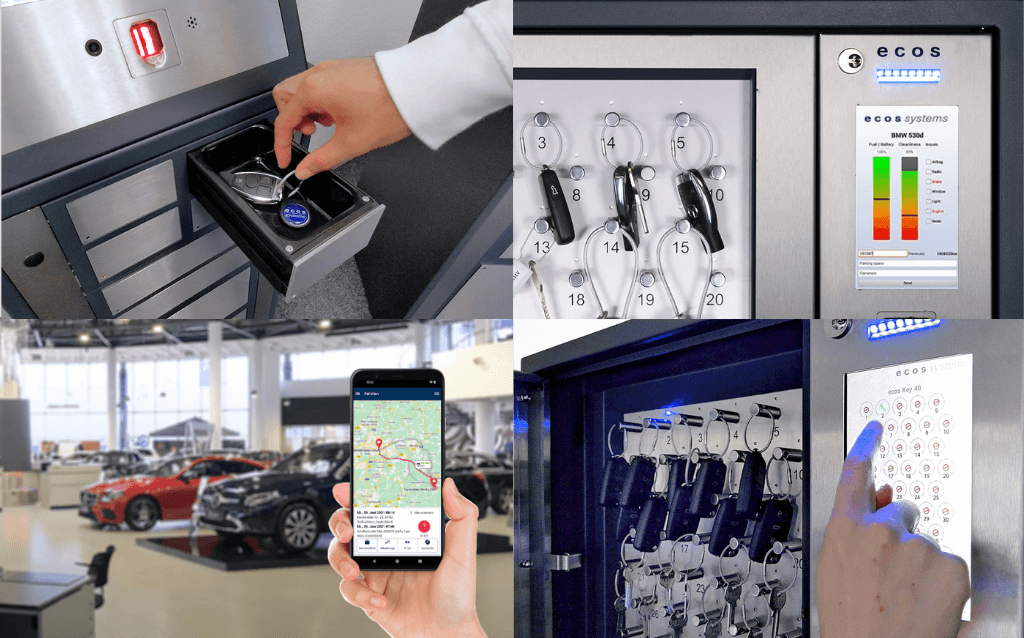
As an aside, ecos equipment management systems can include automated drawers that close after use to prevent unauthorized access to organizational USB devices. The system’s software dashboard and associated ecos webman mobile app also help you inventory and track them.

Other common physical-to-digital attack methods include:

  • Tailgating: Following authorized personnel through secure entry points to reach sensitive systems.
  • Badge cloning: Using handheld readers to copy RFID credentials from a distance
  • Rogue device installation: Using unsanctioned devices to intercept or access network data. Each relies on weak physical access controls, not software flaws.

Contractor and visitor access creates a hidden backdoor

Attackers will seek the weakest links to exploit. If they want to target workers, they’ll likely consider how to exploit contractors and 3rd-party service workers, who often have less rigorous vetting and security training.

Consider whether your organization might have any of these common vulnerabilities:

  • Contractors issued with long-term access instead of time-limited credentials
  • No verification of identity or authorization upon arrival
  • No mechanism to secure unsanctioned devices or USB drives
  • Tolerance for keys or badges shared between technicians
  • Access not revoked after work is completed

These “temporary” privileges can easily become long-term liabilities.

Key cloning and unauthorized duplication

Traditional key management systems offer little protection against duplication. Metal keys can be copied at any hardware store. Plastic fobs and RFID cards can be cloned with inexpensive tools. If your key management lacks audit trails, you’ll rarely know when it happens.

Key management systems that include integrated cameras act as an additional layer of security against unauthorized access. For example, ecos systems include an integrated camera that can capture pictures or videos of users at the cabinet. This allows various use cases from real-time verification of a user’s ID card to investigation purposes in case of a security event.

Major Cybersecurity Standards Emphasize Physical Control

Global security frameworks have long recognized the importance of converging physical security with cybersecurity. For example, standards such as KRITIS (Germany’s critical infrastructure regulations), ISO/IEC 27001 (internationally), and CISA guidelines in the US all mandate physical security controls.

Meet multiple standards with one system

The strength of a modern access control platform lies in its ability to satisfy multiple regulatory regimes simultaneously. Rather than implementing separate systems for different standards, organizations using modern key management systems, like those from ecos, can achieve unified compliance.

  • Real-time audit trails support KRITIS reporting timelines
  • Tamper-proof logs align with ISO 27001 Annex A
  • Contractor vetting and temporary credentials meet CISA recommendations
  • Multi-user authentication fulfills the two-person rule requirements across sectors

Modern Physical Security for Critical Infrastructure

Modern security architecture should use your physical access controls as a real-time, intelligence-driven layer of defense. This means moving to systems that monitor, analyze, and respond to access events the moment they occur.

ecos delivers this next-generation approach—designed for the realities of 24/7 operations, regulatory scrutiny, and converged cyber-physical threats.

Real-time monitoring & anomaly detection

Most traditional key management systems operate on a batch communication model. Data is collected locally and uploaded once a day, or even once a week. That delay creates dangerous blind spots.

ecos systems use their continuous 4G/5G connectivity to provide real-time updates on all key transactions through our ecos care service. This is independent of your local IT network. Even if someone removes a key at, say, 2:17 a.m., the system alerts supervisors instantly.

More importantly, ecos can automatically identify and alert on anomalies:

  • A user accessing a restricted area outside their shift
  • Multiple failed authentication attempts
  • A key was checked out but not returned within the expected window

Automated compliance reporting

ecos automates compliance with real-time, GPS-tagged logs that tell you who accessed which keys, where, and when. Reports are generated on-demand or scheduled automatically—ensuring you meet strict timelines like those required under KRITIS or CISA guidelines. And because all data is cloud-synced and backed up via ecos care, your records are safe even if local power or network service fails.

Visitor and contractor vetting workflows

With ecos systems, you can issue temporary credentials to contractors and visitors before they even arrive on site through the ecos webman mobile app. Access is limited by time, location, and purpose. You can use asset lockers to provide temporary, secure storage for laptops, USB drives, and other digital devices that might compromise your network once they enter your perimeter. And you can set an automatic expiration date so stale credentials never create vulnerabilities.

Multifactor & even multiuser authentication

Basic access cards or PINs are easy to lose, steal, or share. ecos supports several multi-factor authentication modes, including:

  • RFID + PIN
  • High security reader with dual encoding
  • Biometric scan (fingerprint or vein reader)
  • Mobile credential + geofencing

Even stronger is multi-user authentication—a rare capability among smart key management systems. For high-security keys, you follow the well-established “two-person rule,” requiring two authorized personnel to be physically present to unlock the key. Unlike competitors who treat this as an add-on feature or not at all, ecos builds it into their core key management system.

Building Resilience Through Integrated Security

As we’ve seen, the most effective security strategies no longer treat physical and cyber defenses as separate. Attackers are actively seeking ways to exploit one domain to access another. Your security measures need to stop them in both.

ecos key management systems are built for this integrated reality. They help you seamlessly coordinate between physical access control and cybersecurity operations. The goal is to help you move from merely reactive measures to fully proactive security.

Automated threat detection across domains

When an ecos key cabinet detects suspicious behavior, it sends real-time alerts to designated personnel via email, SMS, or push notification. Supervisors can review the event, verify identity, and take action when needed. And they can do all this anywhere in the field from the ecos webman mobile app.

The only provider with 24/7 support

ecos care includes a 24/7 telephone hotline staffed by trained technical support specialists. No other key management provider offers this round-the-clock support. Most rely on email tickets or business-hour help desks. That lag time for off-hour emergencies can put lives at risk when you’re managing critical infrastructure.

Recovery and continuity planning built in

Resilience means being ready when things go wrong. Even during a power failure or when you suffer connectivity loss, your ecos system stays online and functional.

  • Automatic failover to standalone mode during network outages
  • Dual-database architecture (synchronized local and cloud copies) for uninterrupted operation
  • Battery backup for emergency service
  • Mechanical safety locks for tool-free emergency access

Take the Next Step Toward True Resilience

You can’t prevent every threat to your infrastructure. But you can build a system that detects risks early, responds faster, and recovers with confidence.

Physical access is your first line of defense. Make sure it’s built to last.

Schedule a consultation with ecos key management specialists today.